


Agate
Physical Properties
Chemical Composition: Silicon dioxide (SiO₂), like all quartz varieties.Hardness: 6.5–7 on the Mohs scale, suitable for various types of jewelry.
Luster: Waxy or silky.
Transparency: Typically translucent to opaque.
Specific Gravity: ~2.6.
Origin:
Widely distributed, found in places like China, India, and Brazil.
Characteristics:
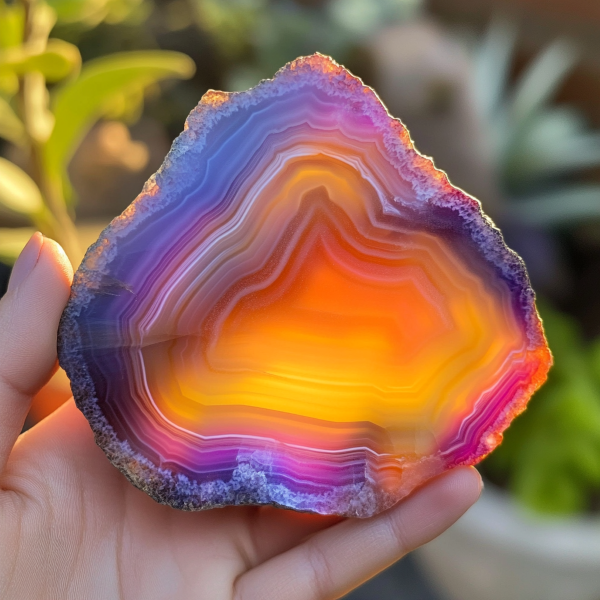
Known for its vivid stripes and rich colors, agate has high artistic value and is suitable for carvings and jewelry.
Colors and Patterns
Agate is celebrated for its diverse patterns and hues:
Banded Agate: Alternating layers of different colors.Moss Agate: Green, plant-like inclusions resembling moss.
Fire Agate: Iridescent flashes of color caused by iron oxide layers.
Dendritic Agate: Features tree-like or fern-like inclusions.
Blue Lace Agate: Gentle blue with delicate white bands.
Metaphysical and Cultural Significance
Symbolism: Agate is often associated with balance, grounding, and protection.
Healing Properties: Promotes emotional stability. Boosts mental clarity and focus.
Cultural Uses: In ancient civilizations, agate was used in amulets and talismans for protection and good luck.
Formation Process
Agate forms in cavities of volcanic rocks through the slow deposition of silica-rich solutions, creating its signature layered appearance. Each layer reflects changes in mineral content and environmental conditions.
Care Instructions
Cleaning: Clean with mild soap and warm water. Avoid exposure to harsh chemicals or prolonged sunlight.
Storage: Store separately to prevent scratches from harder gemstones.
Interesting Facts
- Agate has been used in ancient artifacts, including beads, seals, and carvings.
- It’s found worldwide, with notable deposits in Brazil, India, and Madagascar.
- The ancient Greeks believed agate brought courage and strength to its wearer.


